For teams
You can see the invoice. Caprock shows you what produced it.
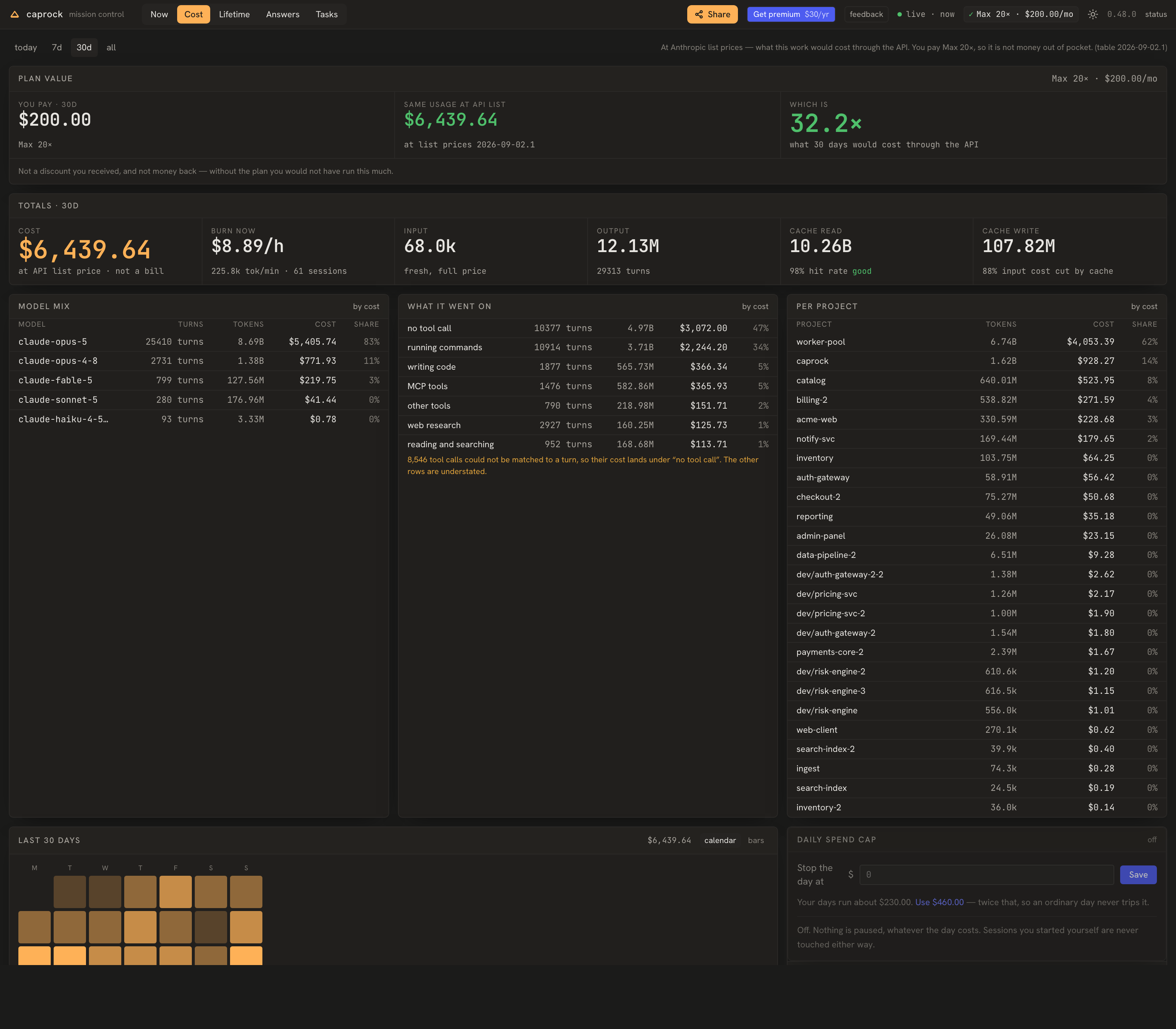
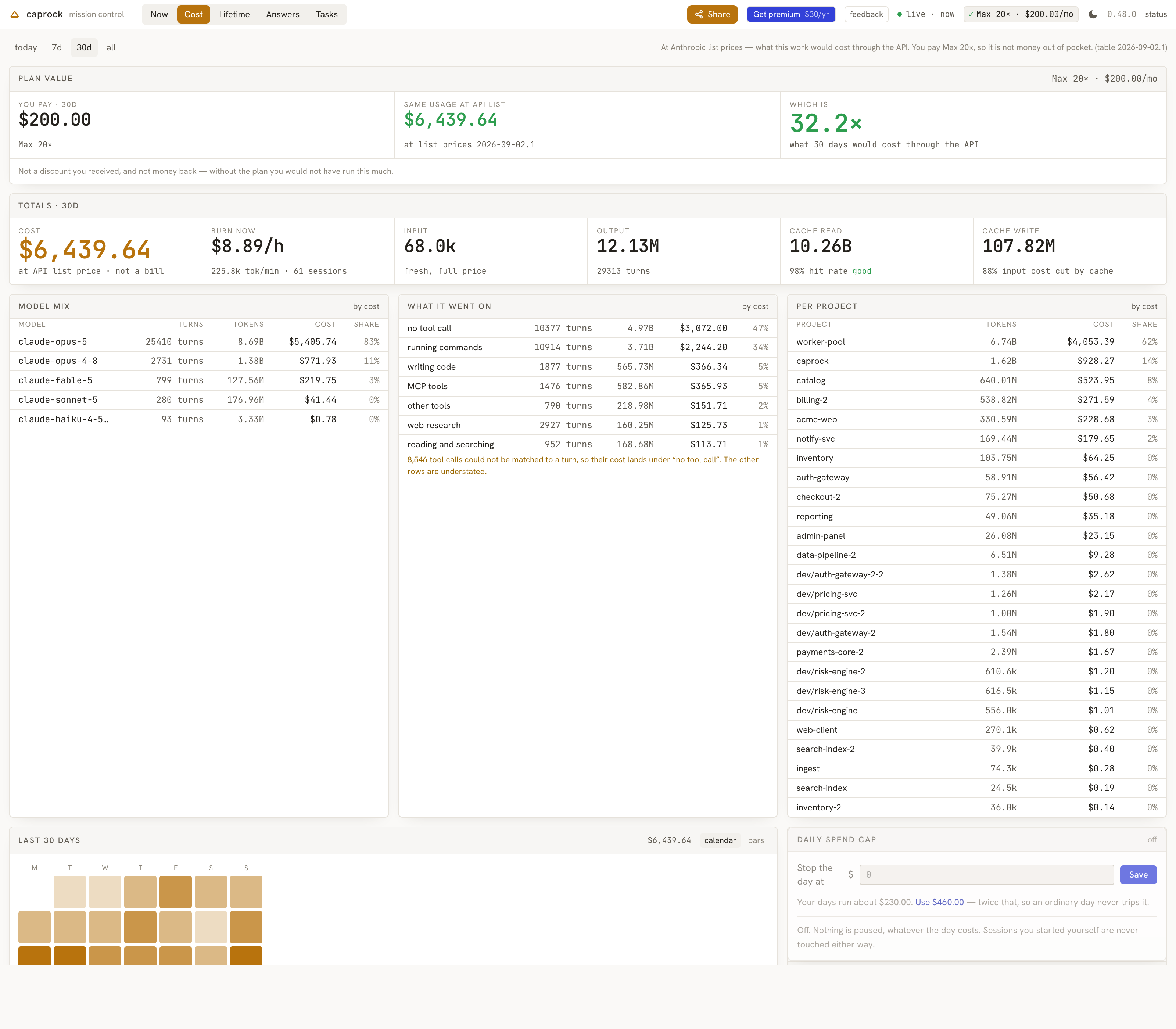
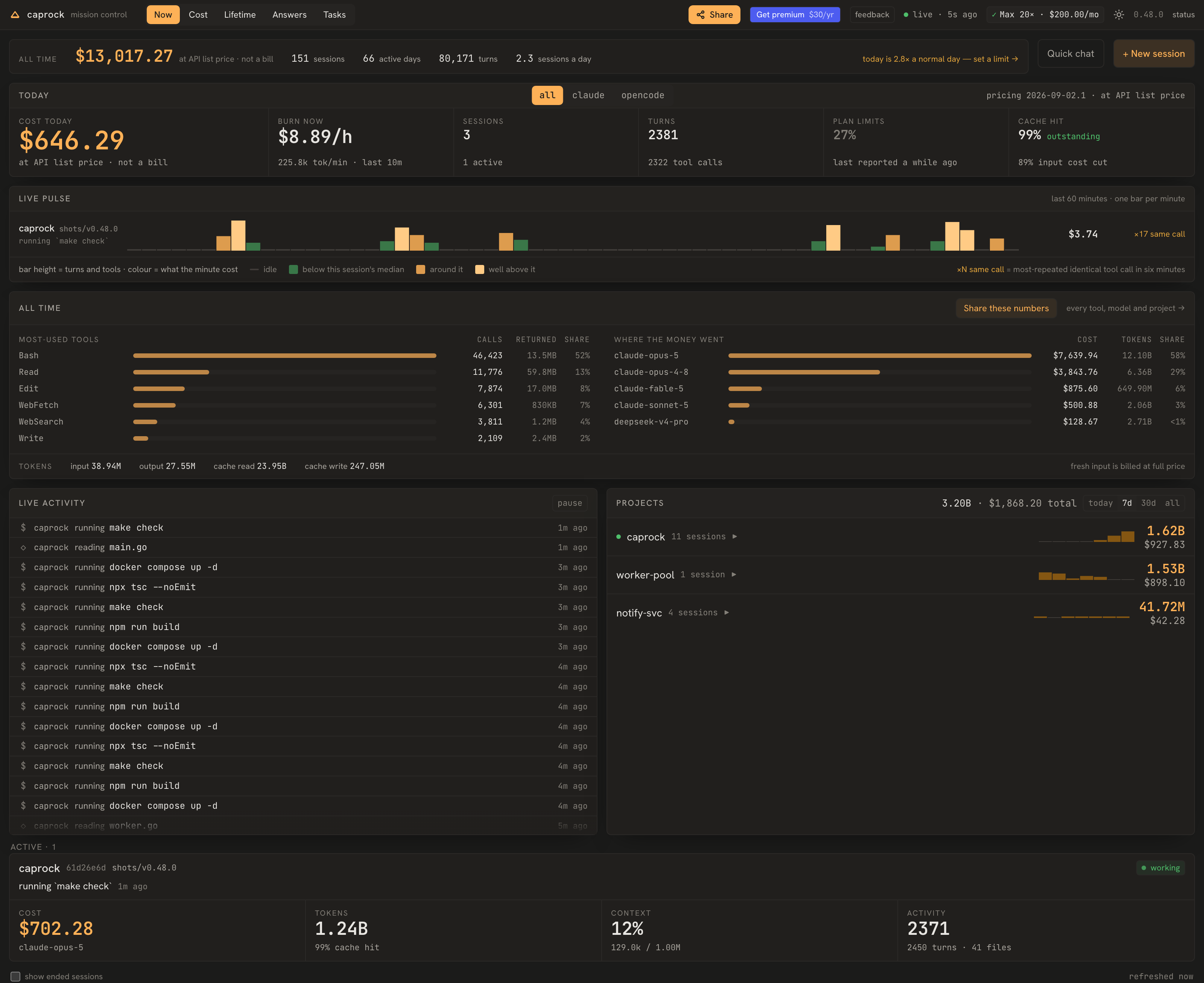
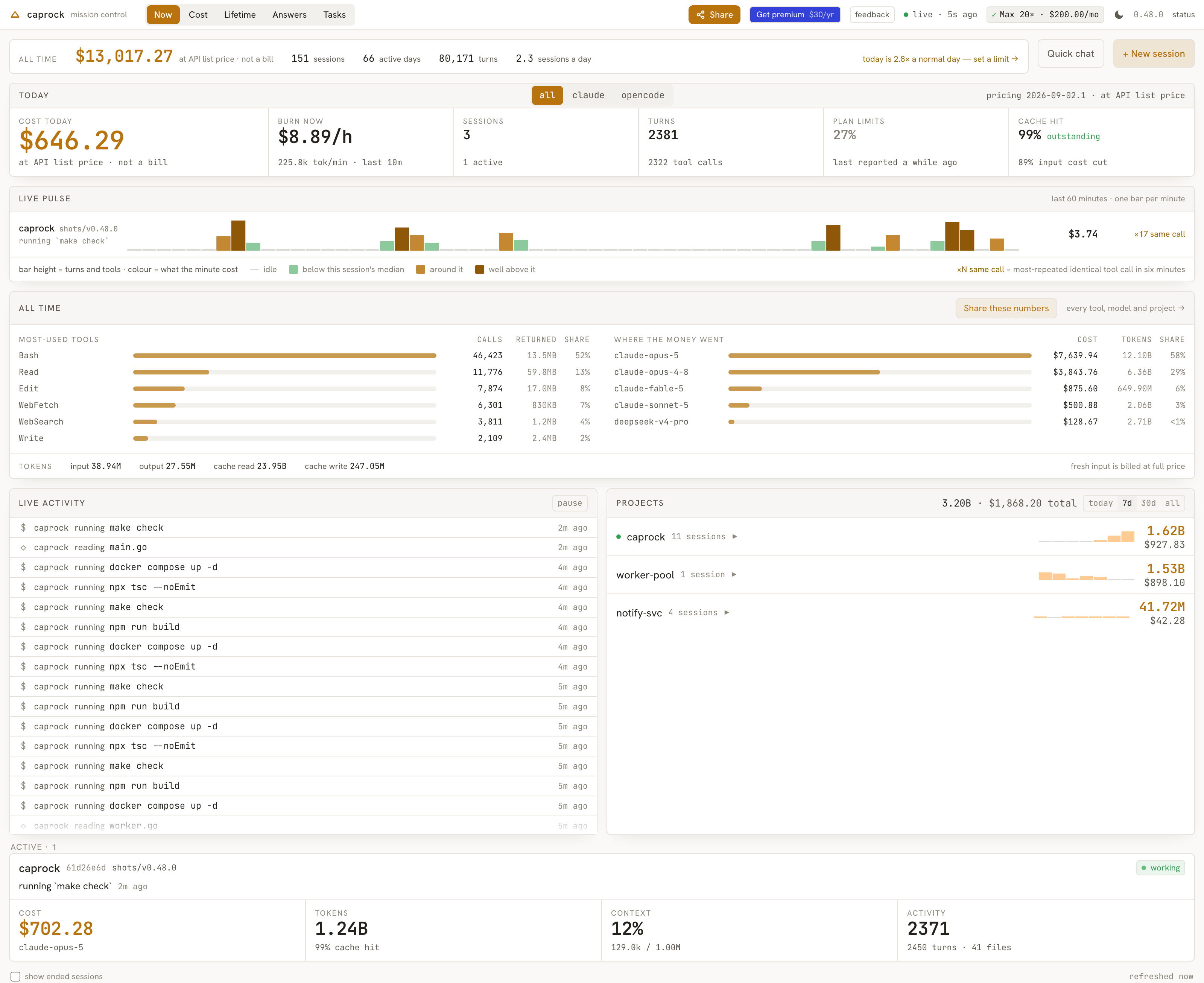
Cost per session and per repository, measured on every machine from the transcripts Claude Code already writes, at Anthropic list prices — and rolled up per person across the team. Runs on your own infrastructure, deployed with your team, with the boundary you set on what ever leaves a machine.
Apache-2.0 · macOS, Linux, Windows · runs on the Claude subscription you already pay for
What you get
Three numbers your invoice cannot give you.
Per person
What each developer's Claude Code usage costs, measured from the transcripts Claude Code already writes.
Per repository
Which repo — and inside a monorepo, which directory — the money actually went to.
Per session
The session that ran away, while it is running: what it is doing, what it has spent, whether it is stuck in a loop.
At Anthropic list prices, from usage your team already paid for on the subscriptions they already have. Not a bill, and not a saving — the picture of where it went.
Where it runs
In your VPC. Counters leave a machine; content never does.
Deployed on your own infrastructure
A collector on a box in your network. No account with us, no data in our hands, nothing to review but code you can read.
Counters, not content
Token counts, costs, timestamps, repository names. No prompts, no code, no prose Claude wrote — the workstation binary is Apache-2.0 and you can check what it sends before you decide anything.
Aggregates by default
Per-person is something an admin turns on, everyone can see is on, and everyone sees — including the admin's own numbers. A budget tool, not a performance tool.
The call
Twenty minutes, and you leave knowing what this looks like on your machines.
- — We show you Caprock running on a real machine, with real numbers.
- — You tell us how your team runs Claude Code and where the budget goes now.
- — We agree what a pilot looks like: which machines, which repos, what you want to see first.
- — No deck, no follow-up sequence, no SDR.
On pricing, so it is not a surprise on the call: it is per person, never a share of your AI spend — we should not earn more because your team burned more. The number depends on team size and whether you pilot first.
Before you book
The three that always come first.
What does it cost?→
Per person — never a share of your AI spend, because we should not earn more when your team burns more. The number depends on team size and whether you pilot first.
What happens to the free version?→
Nothing. Solo and local use stays free and Apache-2.0, and loses no features to make a team plan look better. The paid part is the aggregate across machines, not the machine itself.
How does a team start?→
With a pilot: we deploy it with your team, on your infrastructure, and tune what the dashboard shows around how you actually work. The single-machine version is installable right now if you want to see the measurements before the call.
Would rather write than talk? … reaches the same person.